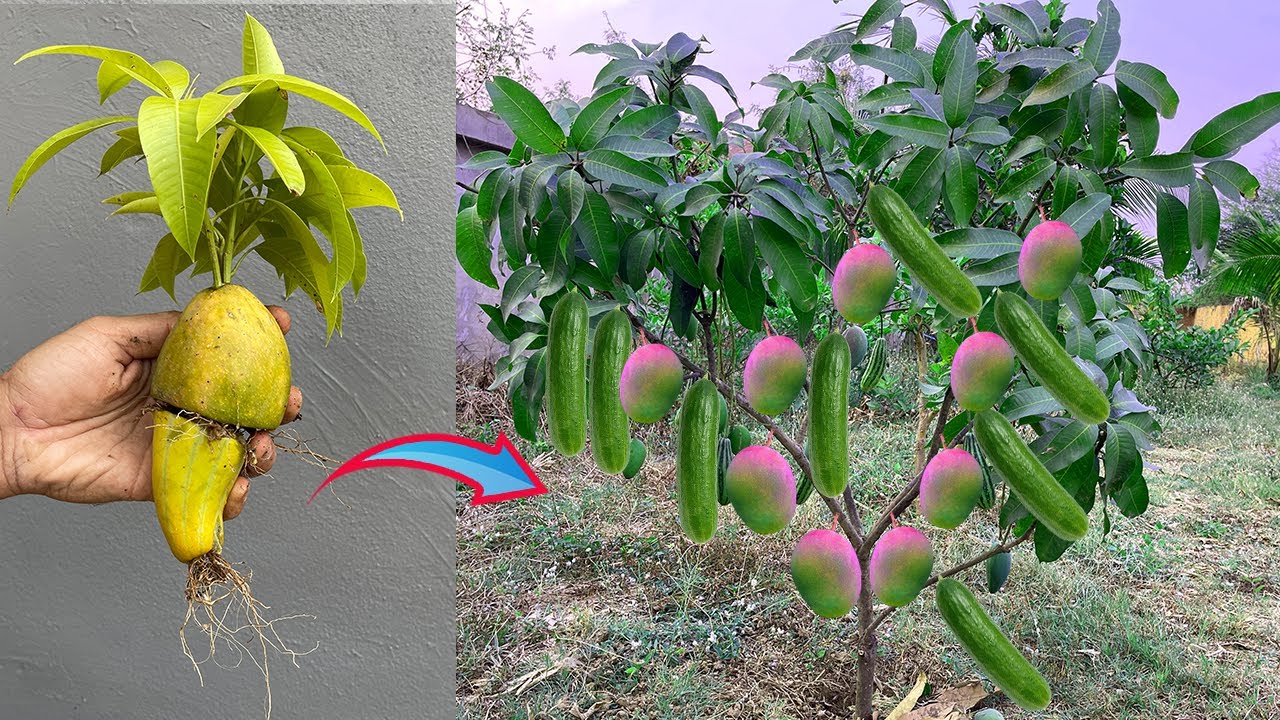
For Growing Mango Tree with Cucumber and Grow Fruit Fast – Unique Technique Propagate Mango
Growing a mango tree is a rewarding experience, but many gardeners feel impatient waiting several years for fruits to appear. Because of this, creative gardeners around the world have experimented with companion planting, natural stimulants, and propagation tricks to encourage faster and healthier mango growth. One such idea that has attracted attention is growing a mango tree together with cucumber as a supportive companion plant. While cucumber does not magically turn a mango tree into a fruiting plant overnight, this unique technique focuses on improving soil health, root activity, and overall plant vigor, which can help mango trees establish faster and reach fruiting age sooner.
Understanding the Idea Behind Mango and Cucumber Growing Together
Mango is a long-living fruit tree that needs strong roots, rich soil, warmth, and good moisture balance. Cucumber, on the other hand, is a fast-growing vine with shallow roots and high water content. When grown together properly, cucumber can act as a living ground cover around young mango plants. This combination helps conserve soil moisture, reduce weed competition, and improve microbial activity in the soil.
The key idea is not that cucumber directly transfers nutrients to mango, but that it creates a favorable micro-environment. Healthy soil leads to stronger mango growth, and stronger growth often means earlier flowering and fruiting.
Preparing the Mango Plant for Fast Growth
To begin, choose the right mango planting material. Grafted mango plants are the best option if your goal is fast fruiting. A grafted mango tree can produce fruit in 2–4 years, while seed-grown mango trees may take 5–8 years or more.
Select a sunny location that receives at least 6–8 hours of direct sunlight daily. Mango trees love warmth and good air circulation. Dig a wide planting hole and enrich the soil with well-rotted compost, cow manure, or vermicompost. Avoid waterlogged areas, as mango roots are sensitive to excess moisture.
Sowing Cucumber Around the Mango Tree
After planting the mango tree, wait about 2–3 weeks until it shows signs of new growth. Then you can sow cucumber seeds around the mango plant, keeping a distance of about 30–40 cm from the mango trunk. This spacing prevents root disturbance while still allowing cucumber vines to spread and cover the soil surface.
Cucumbers grow quickly and form broad leaves that shade the soil. This reduces evaporation, keeps the soil cooler in hot climates, and limits weed growth. Less weed competition means the mango tree can absorb nutrients more efficiently.
Soil Benefits of the Mango–Cucumber Combination
One major advantage of this technique is improved soil life. Regular watering for cucumber keeps the soil evenly moist, encouraging beneficial microorganisms and earthworms. These organisms break down organic matter and release nutrients slowly, which benefits the mango tree.
Cucumber plants also drop old leaves as they grow. When these decompose, they add organic matter back into the soil. Over time, this improves soil structure, making it looser and more aerated, which helps mango roots expand easily.
Natural Nutrition and Care Routine
To support both plants, use natural fertilizers. A liquid compost tea made from cow manure, banana peels, or kitchen waste can be applied every 15–20 days. This provides gentle nutrition without burning roots.
Water regularly but moderately. Cucumbers need frequent watering, while mango prefers deep but less frequent irrigation. The balance can be achieved by watering lightly every day during cucumber growth and deeply once or twice a week for the mango tree.
Mulching is highly recommended. Dry leaves, rice straw, or grass clippings placed around the mango base (not touching the trunk) further conserve moisture and improve soil quality.
Pruning and Training for Faster Mango Fruiting
Proper pruning plays an important role in early fruiting. When the mango plant reaches about 1 meter in height, pinch the top to encourage side branches. More branches mean more potential flowering points in the future.
While cucumbers are growing, ensure their vines do not climb onto the mango tree. Keep them trained along the ground or on small supports to avoid competition for light.
Removing Cucumber at the Right Time
Cucumber is a short-season crop. Once it finishes fruiting (usually within 2–3 months), remove the vines and leave the roots in the soil. As the roots decompose, they add organic matter and create tiny air channels that benefit mango roots.
After cucumber removal, continue mulching and feeding the mango tree. At this stage, the mango plant often shows faster vegetative growth due to improved soil conditions.
Realistic Expectations and Final Tips
It is important to understand that no technique can force a mango tree to fruit instantly. However, this unique mango and cucumber growing method helps create ideal growing conditions, which can shorten the waiting period naturally. Combined with grafted plants, proper sunlight, organic nutrition, and pruning, this approach can significantly improve growth speed and overall plant health.
In conclusion, growing mango with cucumber is a smart, low-cost, and eco-friendly technique for home gardeners. By improving soil moisture, fertility, and biological activity, this method supports faster mango development and brings you closer to enjoying sweet, homegrown mango fruits sooner than expected. 🌱🥭