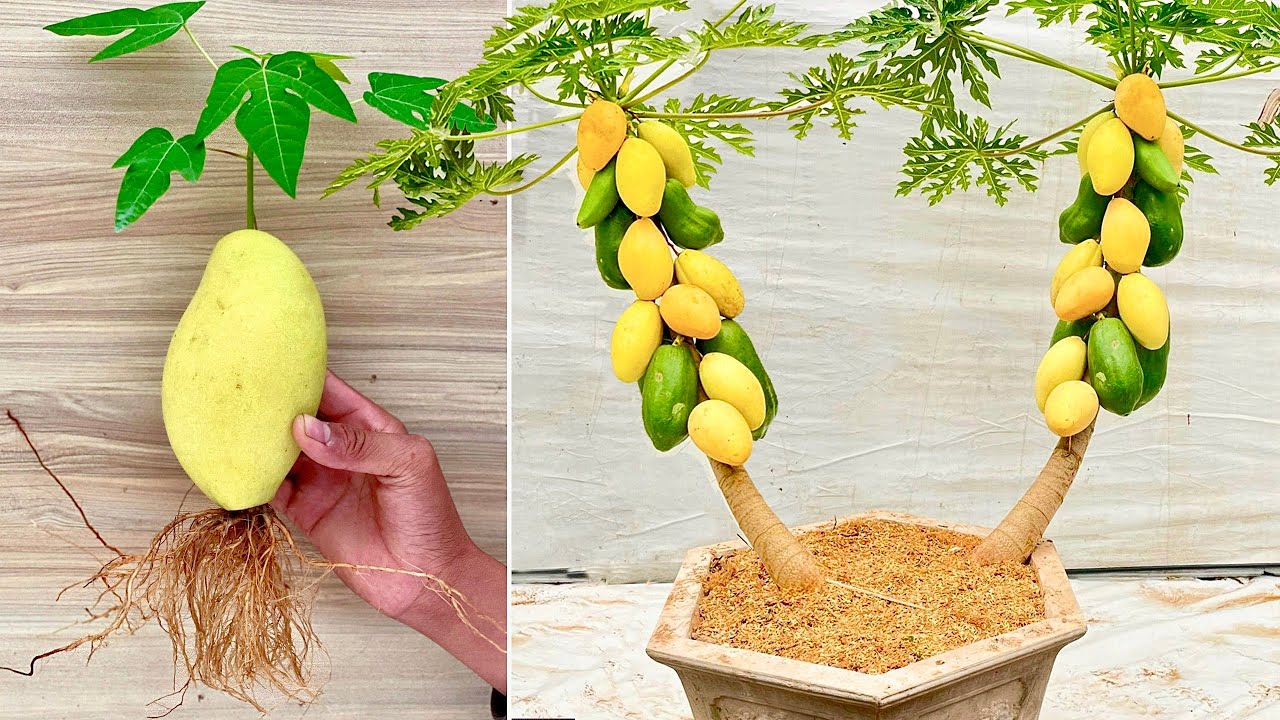
Unique Technique: Growing Papaya Tree with Mango by Using Aloe Vera | Grafting Papaya
Growing fruit trees using creative grafting techniques has become very popular among home gardeners and experimental farmers. One of the most talked-about ideas is grafting papaya with mango using natural materials such as Aloe Vera. Although papaya and mango are very different plants, many gardeners enjoy trying unique and traditional techniques to improve plant health, speed up growth, and increase survival rates. This article explains the concept, method, and care practices behind this unusual approach, while also sharing practical tips for success.
Understanding the Idea Behind Papaya–Mango Grafting
Papaya is a fast-growing, soft-stemmed plant, while mango is a woody, long-living fruit tree. Because of their biological differences, direct graft compatibility is challenging. However, this technique is often practiced as an experimental or supportive grafting method, where papaya seedlings are encouraged to grow near or onto mango trees to benefit from shade, nutrients, and strong root systems.
Aloe Vera plays an important role in this process. It has long been used in traditional gardening because of its antibacterial, antifungal, and healing properties. Aloe gel helps protect graft wounds, reduces infection, and supports faster tissue recovery.
Benefits of Using Aloe Vera in Grafting
Using Aloe Vera in grafting papaya with mango offers several potential advantages:
- Natural antiseptic protection for cut surfaces
- Moisture retention at the grafting point
- Reduced stress on young papaya plants
- Improved callus formation during healing
- Eco-friendly and chemical-free solution
Aloe Vera gel is rich in enzymes, vitamins, and growth-supporting compounds, making it an excellent natural aid during plant propagation.
Materials Needed
Before starting, prepare the following materials:
- Healthy young papaya seedling (30–45 cm tall)
- Mature mango tree or strong mango rootstock
- Sharp, clean grafting knife
- Fresh Aloe Vera leaf
- Grafting tape or soft plastic strip
- Clean cloth or tissue
- Rubbing alcohol for sterilization
Step-by-Step Grafting Technique
Step 1: Select Healthy Plants
Choose a disease-free papaya seedling with a strong stem. The mango tree should be healthy, with good sap flow and no visible pests or fungal problems.
Step 2: Prepare Aloe Vera Gel
Cut a fresh Aloe Vera leaf and extract the clear gel. Keep it clean and ready for application.
Step 3: Make the Grafting Cut
On the mango tree, choose a low branch or soft young shoot. Make a vertical slit about 3–4 cm long. On the papaya stem, make a matching wedge cut at the base.
Step 4: Apply Aloe Vera
Generously apply Aloe Vera gel to both the mango slit and the papaya cut surface. This helps prevent infection and keeps the tissues moist.
Step 5: Join the Plants
Insert the papaya wedge into the mango slit carefully, ensuring good contact between the cut surfaces. Proper alignment is essential for any chance of tissue bonding.
Step 6: Secure the Graft
Wrap the grafting area tightly with grafting tape or soft plastic. Do not over-tighten, as this can restrict sap flow.
Step 7: Protect the Graft
Shade the grafted area from direct sunlight for the first 10–14 days. Maintain moderate humidity by lightly misting the area.
Aftercare and Maintenance
Post-grafting care is crucial. Water the mango tree regularly but avoid waterlogging. Do not disturb the graft for at least three weeks. Aloe Vera gel can be reapplied externally if the graft area looks dry.
Watch for signs of success, such as papaya leaves remaining green and upright. If the papaya wilts completely, the graft has failed and should be removed to protect the mango tree.
Important Notes and Realistic Expectations
It is important to understand that papaya and mango are not naturally compatible graft partners in commercial horticulture. This technique should be treated as an experimental or educational practice rather than a guaranteed fruit-producing method. Many gardeners use this approach to:
- Demonstrate grafting principles
- Explore traditional gardening ideas
- Improve papaya survival near mango trees
- Create engaging gardening content
In some cases, papaya may grow temporarily using the mango tree as support, but long-term fusion is rare.
Alternative Practical Use of This Technique
If full grafting is unsuccessful, you can still gain benefits by planting papaya very close to mango trees and using Aloe Vera during transplanting. This improves root health, reduces shock, and enhances early growth.
Conclusion
The unique technique of growing papaya with mango using Aloe Vera is a fascinating example of creative gardening. While it may not always result in permanent graft success, it offers valuable learning experiences and highlights the power of natural plant care methods. Aloe Vera remains a highly effective natural aid for grafting, healing, and plant protection. For gardeners who enjoy experimentation and sustainable practices, this method is worth trying with patience and proper care.