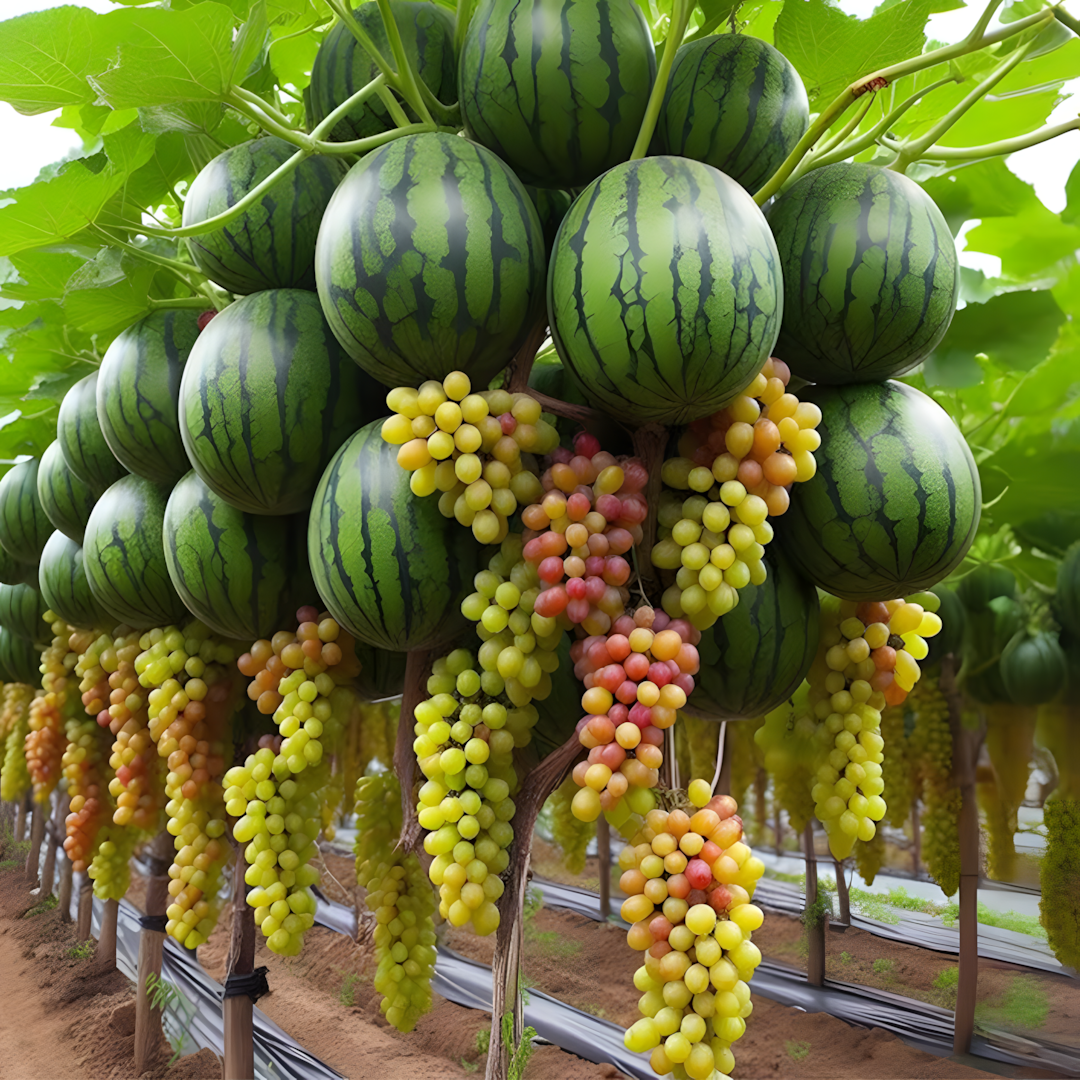
Grafting Watermelon and Grapes to Get Fruitful for Your Consideration
Grafting is a fascinating horticultural technique that has allowed gardeners to improve plant vigor, disease resistance, and productivity for centuries. Although watermelon and grapes are botanically very different and cannot form a true biological graft that produces hybrid fruit, many growers still enjoy experimenting with creative grafting methods to strengthen root systems, improve yields, or simply explore unique gardening challenges. When done correctly, grafting techniques can promote healthier plants, better nutrient uptake, and stronger tolerance to environmental stress. In this guide, we will explore the idea of grafting watermelon and grapes to get fruitful, not as a literal hybridization but as a practical gardening approach for maximizing growth through supportive rootstock techniques and companion training.
Understanding the Concept Behind the Technique
Watermelon (Citrullus lanatus) is a vining crop that thrives in warm climates and requires a strong, disease-free root system to produce sweet, large fruits. Grapes (Vitis vinifera), on the other hand, are woody perennial vines known for their strength, climbing habit, and long-lasting root structures. While these two plants cannot naturally fuse into a single fruit-bearing organism, gardeners have discovered creative methods to combine their growth habits, trellis support, and soil-sharing techniques to encourage stronger fruit production.
The concept mainly involves:
- Using grape vines as a natural trellis structure for watermelon vines
- Strengthening soil conditions by planting both crops together
- Testing supportive graft-like binding techniques to enhance nutrient flow
- Encouraging watermelon vines to climb, resulting in better air circulation and fruit protection
This approach does not create a biological hybrid, but it helps maximize yield through shared gardening methods and careful plant management.
Preparing the Plants for the Process
To begin exploring this technique, you will need healthy watermelon seedlings and a young but sturdy grape plant that has begun to establish its main vine. The grape plant should ideally be at least one year old, with flexible stems that can support light training.
1. Choose the Right Varieties
Select compact or medium-spreading watermelon varieties such as:
- Sugar Baby
- Crimson Sweet
- Black Tail Mountain
For grapes, hearty table grape varieties like Red Globe, Cardinal, or Thompson Seedless work well.
2. Prepare the Growing Area
Both plants require full sunlight, so choose a location with:
- At least 6–8 hours of direct sun
- Well-draining soil rich in organic matter
- Adequate spacing (watermelons need around 1.5 meters of space)
Create mounds or raised beds to encourage proper root drainage.
The Grafting-Style Binding Technique
Although you cannot make a true vascular graft between watermelon and grapes, you can perform a binding technique to encourage them to grow cooperatively. This method is sometimes referred to as “symbiotic pairing” in creative gardening.
Step-by-Step Method
1. Bring the Stems Together
Allow the watermelon vine to reach about 30–40 cm in length. Position it beside a low-growing grape vine branch.
2. Make a Light Contact Cut
Using sanitized tools, make a shallow 1–2 cm scrape on the outer skin of each stem. This does not cut into the vascular system but removes some outer tissue.
3. Bind the Stems Together
Place the scraped surfaces against each other and wrap them:
- With grafting tape
- Or with soft plastic strips
The purpose is not to merge the plants but to allow them to grow in very close contact, encouraging supportive growth.
4. Support the Watermelon Vine on the Grape Trellis
As the watermelon vine grows, gently lift it and guide it onto the grape vine support or trellis. This encourages vertical growth, reducing rot and improving air circulation.
Shared Soil and Root Conditioning
This technique becomes even more effective when both plants share the same soil bed enriched with:
- Aged compost
- Decomposed manure
- Organic potassium fertilizers
- Bone meal for root strength
Watermelons are heavy feeders, while grapes are moderate feeders, but both benefit from fertile, well-balanced soil.
Mulch the area with straw or dried leaves to retain moisture and protect roots from heat.
Benefits of Combining Watermelon and Grapes in Your Garden
Even though the two fruits will not merge, pairing their growth habits brings several advantages:
1. Better Sunlight Utilization
Watermelon vines trained upward absorb more sunlight and photosynthesize more efficiently.
2. Reduced Disease and Rot
Fruit lifted off the soil is less likely to suffer from fungus, rot, and pests.
3. Improved Fruit Size and Sweetness
Healthy vines supported by strong soil and improved ventilation often produce larger, sweeter fruits.
4. Space-Saving for Small Gardens
Vertical training allows gardeners with limited space to grow both crops together.
5. Natural Trellis Support
Grape vines offer a long-lasting structure for watermelon vines to climb without needing artificial supports.
Maintenance Tips for Best Results
- Prune grape vines lightly to prevent overshadowing the watermelon.
- Hand-pollinate watermelon flowers if bees are limited.
- Water deeply but avoid overwatering the root zone.
- Provide slings made of cloth for heavy watermelon fruits supported above ground.
- Trim excess watermelon vines to direct energy into fruit production.
With consistent care, both plants will flourish side by side.
Conclusion
Grafting watermelon and grapes to get fruitful is best understood as a creative gardening technique rather than a biological fusion. The process helps gardeners explore new methods for supporting vines, increasing airflow, improving soil nutrition, and ultimately encouraging higher yields. While the two plants will always produce their own distinct fruits, growing them together with thoughtful binding and shared support structures can help both crops thrive. This experimental approach is enjoyable, educational, and rewarding—perfect for gardeners who love innovation in their home gardens.