The Best Way to Plant and Grow Luffa Gourds
Luffa gourds—often known as sponge gourds or vegetable sponges—are wonderful plants that offer both delicious young fruits for cooking and mature fibrous gourds that can be turned into natural cleaning sponges. Growing luffa is easier than many gardeners think, especially when you understand its growth cycle, climate needs, and proper care techniques. Whether you want to harvest fresh luffa for the kitchen or natural sponges for home use, the following guide explains the best way to plant and grow healthy, productive luffa vines.
1. Understand the Luffa Plant
Luffa is a warm-season climbing vine in the cucumber family. It grows vigorously, producing long vines that require strong support. The plant thrives in tropical and subtropical regions, making it ideal for countries with long warm seasons like Cambodia, Thailand, India, and similar climates.
A key thing to know is that luffa requires a long growing period—typically 120 to 150 days from planting to fully mature sponge gourds. For food use, the fruits can be harvested much earlier.
2. Choose the Best Planting Time
The best time to plant luffa gourds is during the warm season when temperatures stay consistently above 20°C (68°F). In tropical regions, you can plant almost year-round, but the ideal period is the beginning of the dry season or late cool season—around November to February—so the vines grow vigorously in warming weather.
If you live in a cooler area with a short warm season, start seeds indoors 4–6 weeks before the last frost to give the plants a head start.
3. Prepare Your Seeds for Fast Germination
Luffa seeds have a hard shell and can germinate slowly if planted directly without preparation. To achieve faster and higher germination rates:
• Soak seeds in warm water for 24 hours. This softens the seed coat and speeds sprouting.
• Slightly nick the edge of each seed with a nail clipper (optional but helpful).
• Start seeds in small pots with light, well-draining soil before transplanting.
Seeds typically germinate within 7–10 days when kept warm.
4. Prepare the Soil and Planting Area
Luffa grows best in rich, well-draining soil with a pH between 6.0 and 7.0. Loose, fertile ground allows the roots to spread easily and support vigorous vine growth.
Soil preparation tips:
- Mix compost or aged manure into the planting site to improve nutrient content.
- Ensure good drainage since luffa roots don’t tolerate standing water.
- Add rice husk ash or sand if the native soil is too heavy.
Plant spacing
Plant luffa vines at least 1.5 to 2 meters apart to allow plenty of room for their long vines.
5. Provide a Strong Trellis for Support
Luffa is a climbing vine that grows best with a solid support structure. A good trellis is one of the most important parts of successful luffa cultivation.
Ideal trellises include:
- Wooden or bamboo frames
- Wire or metal fences
- Overhead pergolas or arbors
- A-frame or tunnel trellises
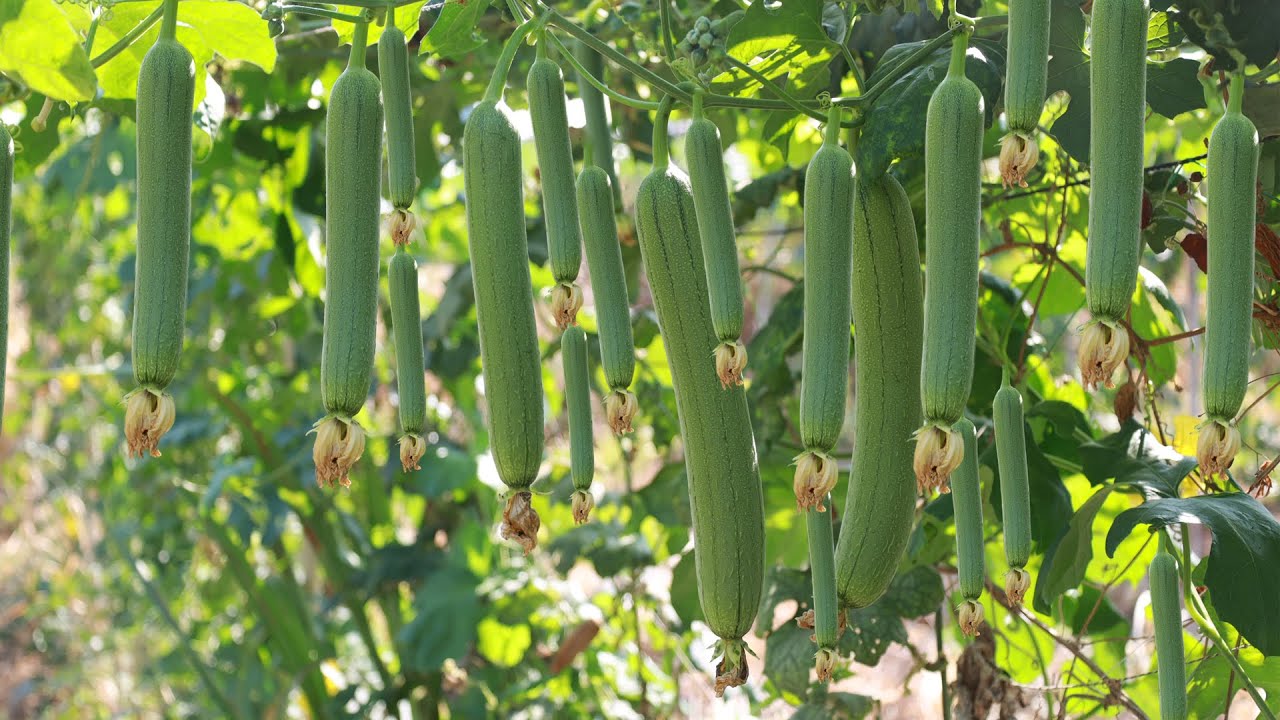
A strong trellis keeps fruits straight, improves airflow, reduces fungal diseases, and makes harvesting easier. Without support, fruits grow curved and plants may rot on the ground.
6. Planting the Seedlings
Once your seedlings are 2–3 weeks old and have several true leaves, transplant them into the garden.
Transplanting steps:
- Plant the seedlings at the base of the trellis.
- Water thoroughly after planting.
- Mulch around the base with dried leaves or straw to keep soil moist and prevent weeds.
Young luffa vines grow slowly at first, then accelerate rapidly once established.
7. Care and Maintenance for Healthy Growth
Watering
Luffa needs consistent moisture, especially during early growth and fruit development.
- Water deeply 2–3 times per week.
- Avoid waterlogging to prevent root rot.
Fertilizing
Feed luffa regularly for best results:
- Use a balanced fertilizer (10-10-10) during early growth.
- Switch to phosphorus and potassium-rich fertilizer when flowering begins to boost fruiting.
Organic options such as compost tea, fish fertilizer, or banana water also work well.
Training the vines
Gently guide vines to climb the trellis. Pinch off side shoots if they become too dense, allowing sunlight to reach all parts of the plant.
8. Managing Pests and Diseases
Common pests include aphids, beetles, and caterpillars. You can control them using:
- Neem oil spray
- Soap-and-water solution
- Regular inspection and manual removal
Good airflow around the trellis helps prevent mildew and fungal diseases.
9. Flowering and Pollination
Luffa plants produce separate male and female flowers. Bees and insects naturally pollinate them, but if fruit production is low, you can hand-pollinate by gently transferring pollen from male flowers to female ones.
10. Harvesting Luffa Gourds
For eating:
Harvest when fruits are 20–30 cm long, still soft and green. At this stage, they are tender and delicious in soups, stir-fries, and curries.
For sponge luffa:
Allow fruits to grow large and fully mature on the vine. When the skin turns brown and feels dry, cut the fruit, peel off the skin, remove seeds, and wash the sponge.
Conclusion
Growing luffa gourds is rewarding and surprisingly simple when you follow the proper steps. From preparing your seeds, enriching the soil, and providing a strong trellis to maintaining consistent watering and harvesting at the right time, luffa vines can thrive in many home gardens. With patience and care, you will enjoy both tasty vegetables and natural sponges from a single amazing plant.